
Life on site
Life on site
What your first week on a solar farm actually looks like
Induction, boots, water and the walk to your block: the shape of a first week on an Australian utility-scale solar build, told in the order it happens.
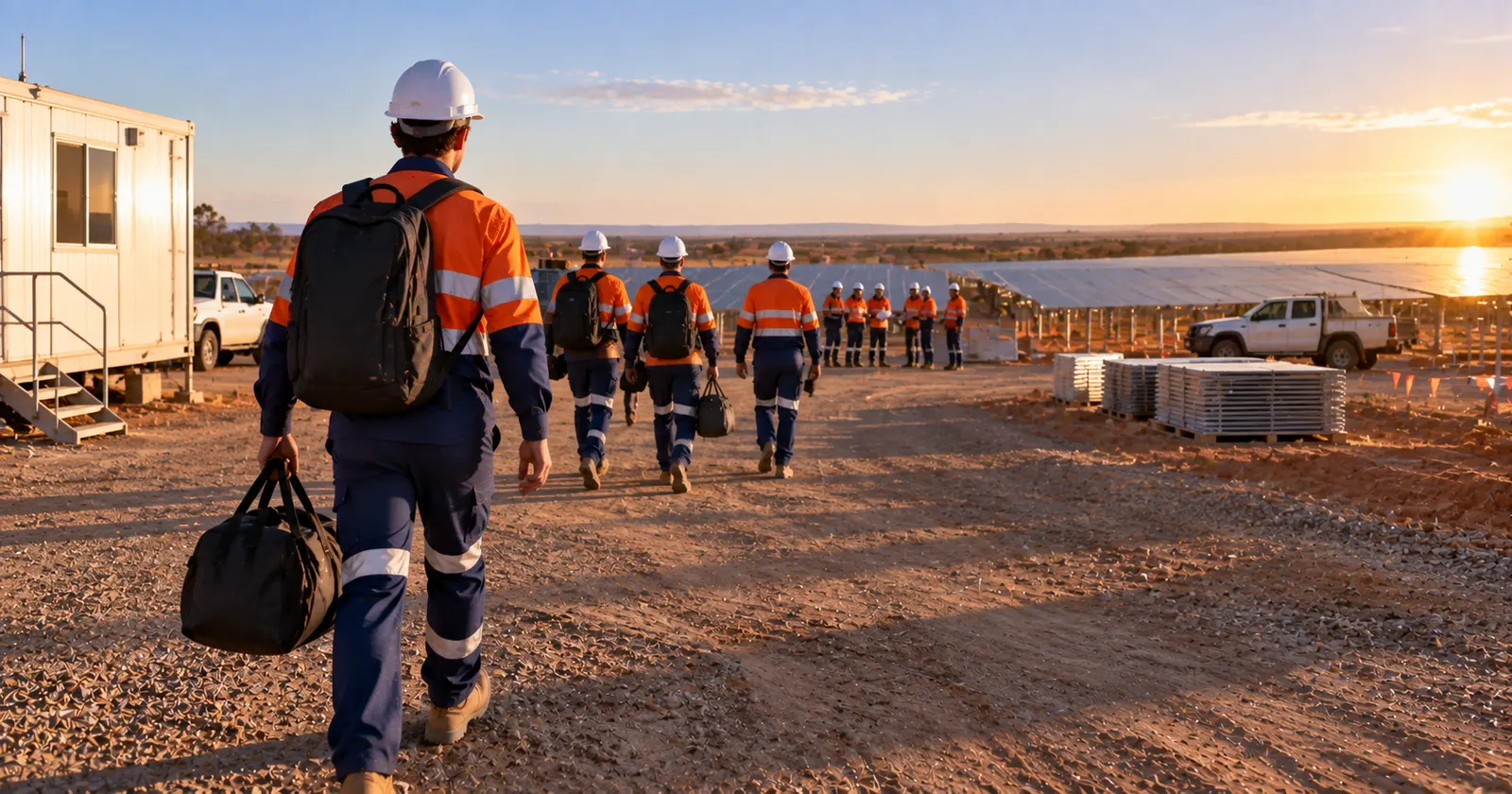
Almost everyone who arrives on a utility-scale solar build has never been on one before. That is normal, and the site knows it. What follows is the shape of a first week — not a promise about any particular project, because every contractor runs its own induction and its own roster, but the order of events is remarkably consistent across the country.
Before you arrive
Most of the first week is decided before you set foot on the array. Two things matter more than anything else you could prepare.
Your tickets, current and verifiable
A white card is the floor almost everywhere. Beyond that, the tickets a site asks for depend entirely on what you will be doing — and the word that keeps coming up is current. A certificate that has lapsed is treated as no certificate at all, and the check happens at the gate rather than after you have driven six hours. The white card, and what else a site actually asks for, have a guide of their own; read it before you buy anything.
Your accommodation, in writing
Some projects run a camp. Some pay a living-away allowance and expect you to find a room in the nearest town. Some do neither. Which one applies to your offer is a question worth asking before you accept it, not after — regional towns near a build fill up, and "I will sort it out when I get there" is how a good job turns into a bad month.
Day one is paperwork and it is not wasted
The first day rarely involves the array. You should expect some combination of:
- a site induction, usually a mix of video, a walk-through and a short assessment;
- a review of your tickets and licences against what the site's matrix requires;
- issue of the personal protective equipment the project supplies, and a check of what it expects you to bring yourself;
- an emergency and evacuation briefing, which on a site measured in square kilometres is genuinely not a formality;
- a crew allocation — the block you will be working, and the leading hand you report to.
The people who struggle in week one are almost never the ones who lack experience. They are the ones who arrived without a ticket they were told to bring.
Take the induction seriously even if you have done five of them elsewhere. Solar has hazards that a general construction induction does not cover — energised DC strings behave differently from anything on a housing site, and the answer to "is this live?" is never a guess.
Then the work itself
By the second or third day you are on your block. If you came in as a labourer or a trade assistant, the first tasks are usually physical and repetitive by design: they are how a crew reads whether you turn up, whether you listen, and whether you can be trusted near somebody else's tools. That is the week labourer jobs on solar farms open with.
The heat is the part people underestimate. An array is an open field with no shade in it by definition, and the working day starts early for exactly that reason. Water is not optional, and neither is telling somebody when you are struggling.
What decides whether a first week turns into a second is boring and consistent: arrive early, ask before you improvise, and finish the shift you started.
Three questions worth asking on day one
- What is the roster, and when is the next break in it?
- Who signs off my hours, and how do I check them?
- What is the path from this crew to the next role up?
The third one surprises people. Supervisors notice who asks it.
This article is general information about how sites operate, not advice about your pay or your entitlements. What you are owed is set by the award or agreement that covers the work — fairwork.gov.au is the authority on that, and we do not restate it here.